
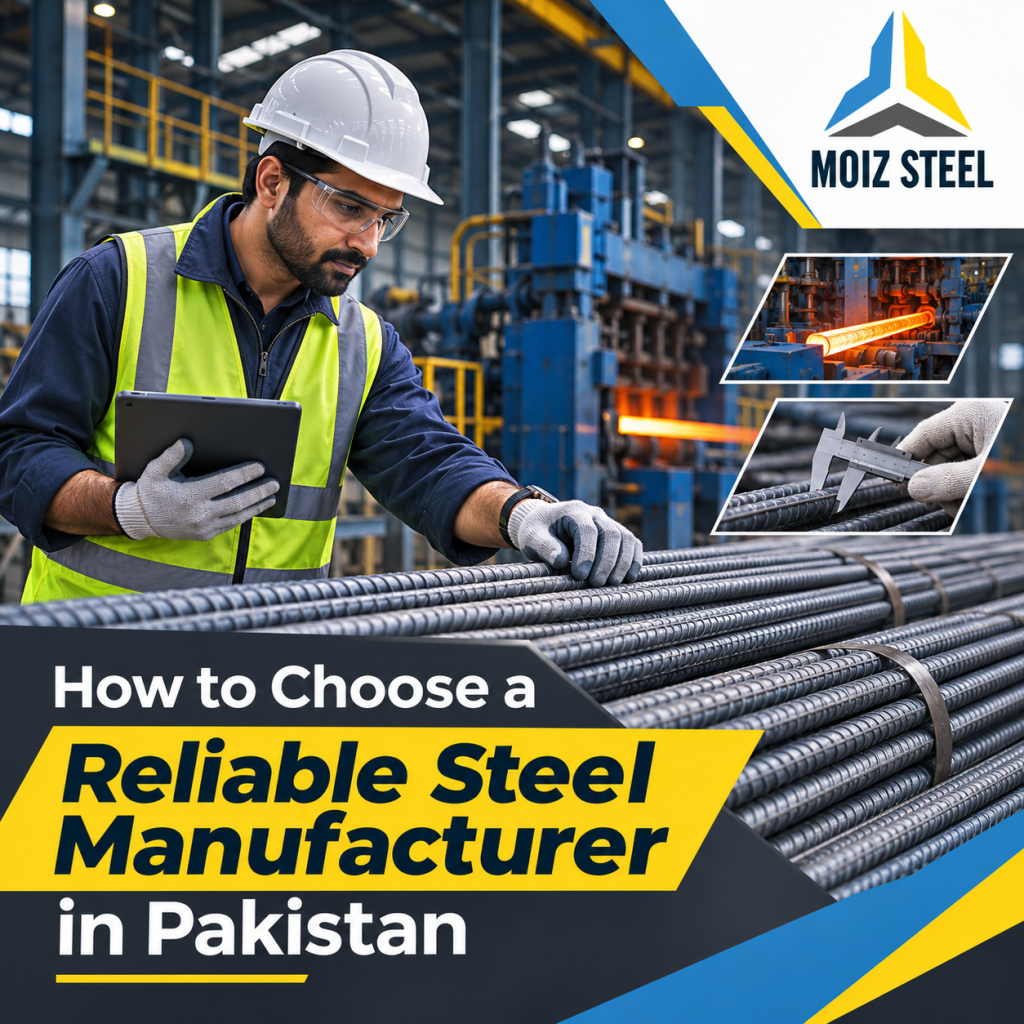
Steel affects a project’s safety, budget, and schedule. Buyers need products that meet engineering specifications, arrive on time, and include reliable documentation. When assessing a steel manufacturer Pakistan offers, compare grades, production controls, testing, delivery, and service rather than relying on price or advertising. A consistent process helps contractors and developers make informed decisions.
1. Understand the Manufacturing Process
The steel manufacturing process turns raw material into reinforcement bars through steelmaking, casting, and rolling. Each stage requires controls to maintain dimensions and mechanical properties.
Ask how temperatures and rolling conditions are monitored, how defects are identified, and how finished bars are marked for traceability. Modern equipment can support consistency, but it does not prove conformity by itself. Request details of inspection procedures and how failed material is managed.
2. Verify Grades and Specification
Get the required grade, diameter, specification, and quantity from authorized documents for the project. Grade 60 is the common grade, whereas other grades could be appropriate for particular designs. A higher grade does not mean that it is superior; the selection should be approved by the structural engineer.
Compare the size, weight per meter, rib pattern, and mechanical properties. Make sure that the quotations correspond with the drawings and bill of quantities.
3. Verify Testing and Quality Standards
A supplier should demonstrate compliance with relevant steel quality standards. Request current product documents and batch-specific reports covering, where applicable, chemical composition, yield strength, tensile strength, elongation, and bend performance.
Check that reports identify grade, size, batch, test date, and laboratory. ISO 9001 concerns quality management; it does not prove every batch meets a product standard. For major projects, arrange independent testing when required.
4. Examine Factory Capabilities
When comparing steel companies, review production capacity, equipment, maintenance, laboratory facilities, and quality-control procedures. Ask how inspections are recorded and non-conforming material is handled.
Moiz Steel reports an automatic continuous casting system, a high-speed rebar rolling mill, and laboratory facilities including Spectro Lab and Universal Testing Machine testing. It also states annual rebar capacity of 200,000 metric tonnes.
These details come directly from the company. Therefore, request the latest documents and confirm that the supplier can meet your order requirements before proceeding.
5. Check Delivery Reliability
Late delivery may hinder the construction project. Enquire about the availability of lead time, diameters, minimum and maximum orders, transportation, and staged delivery. Understand how shortages, damaged cargo, quantity modification, and rejections will be managed.
Include dates, quantities, unloading details, and documentation in the purchase order. In case of multiple sites, ensure coordination of shipments and batches in each delivery.
6. Compare the Complete Cost
Compare quotations for identical grades, sizes, quantities, standards, and delivery conditions. Check price per tonne, taxes, freight, unloading, payment terms, validity, and additional charges.
A low price may not offer value if transport is expensive or documentation is missing. Complete technical checks first, then compare commercial offers from suppliers that meet project requirements. This makes comparisons between steel companies fair and practical.
7. Review Reputation and Communication
Request references from similar projects. Assess response times, order updates, technical support, and complaint handling. Ensure quotations, invoices, test reports, and delivery records identify the same supplier and products.
A steel manufacturer Pakistan buyers shortlist should explain specifications clearly, provide relevant records, and assign an order contact. Speak with sales and technical representatives before placing a large order.
8. Use an Evaluation Checklist
Create a comparison sheet covering grades, standards, test results, capacity, delivery, references, and total cost. Involve engineering, procurement, and site teams in the review. Ask whether the steel manufacturing process is audited. How steel quality standards are verified, and whether steel companies provide records for repeat orders. Confirm capacity against your actual delivery schedule before signing the supply agreement.
Assess the steel manufacturing process through documented controls and finished-product results, not machinery descriptions alone. Confirm that steel quality standards match project specifications. Compare steel companies using the same questions and retain inspection records. A steel manufacturer Pakistan teams select should support its claims with evidence. Review the steel manufacturing process, verify steel quality standards, and record why the supplier meets project needs.
Conclusion
Do not choose on price or familiarity alone. Check conformity, manufacturing controls, test reports, capacity, delivery, and commercial terms. Moiz Steel can be included in the assessment by reviewing its published product and manufacturing information alongside current certificates and quotations. The right steel manufacturer Pakistan buyers choose must demonstrate compliance and supply the required material reliably.
Frequently Asked Questions
1. What should I check before choosing a supplier?
Review grades, standards, batch reports, capacity, delivery, references, and pricing.
2. Why does manufacturing matter?
Controlled production supports consistent dimensions and mechanical properties finished products still require inspection.
3. Which documents should a manufacturer provide?
Request product specifications, conformity documents, batch test certificates, and delivery records.
4. Is the lowest price always best?
No. Compare equivalent products, compliance, testing, delivery, and total cost.
Call us at 92 (42) 3577 1066-71 Ext. 249 or email info@moizsteel.com to get started.