
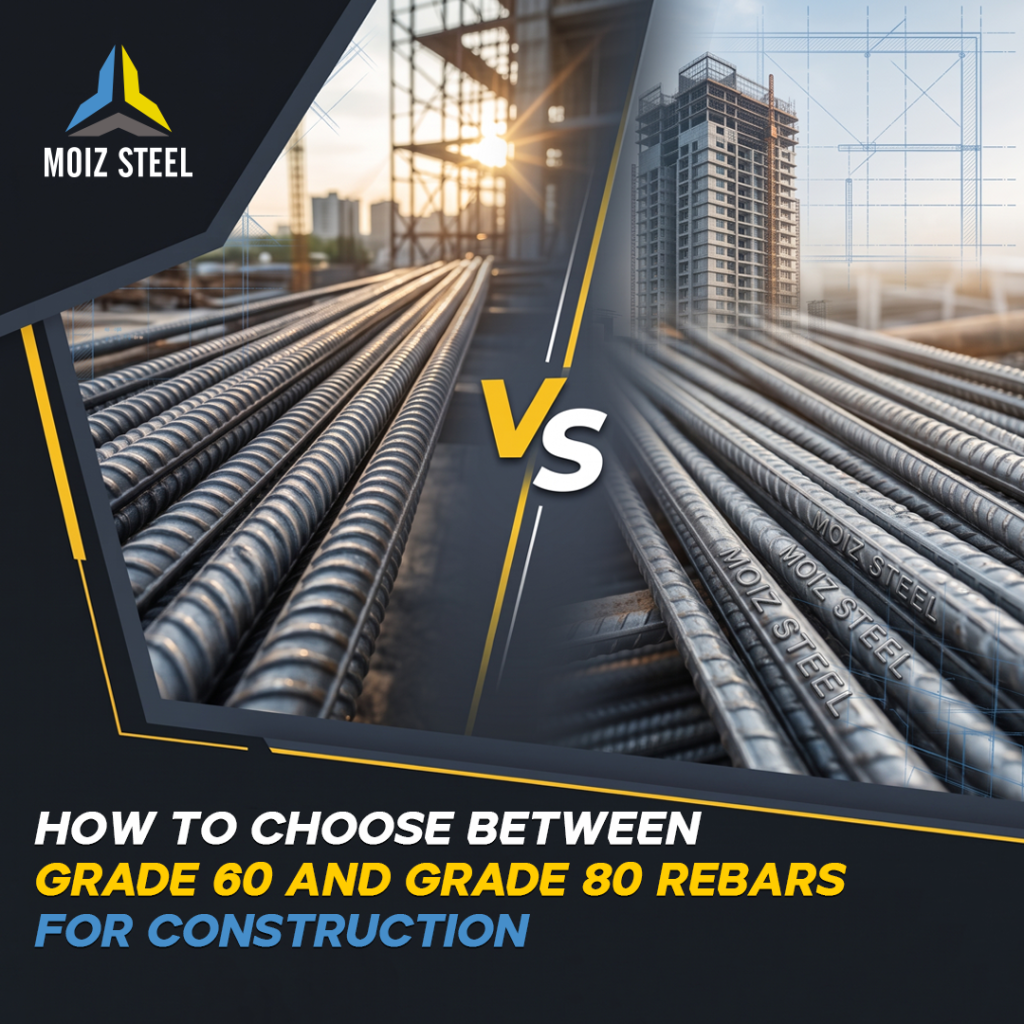
Selection of appropriate reinforcement steel is vital in the design of a durable and safe structure. The selection of a steel grade determines the quality of rebars and designs of the reinforced concrete structures. Where there is a design that can accommodate, Grade 80 rebars are ideal in providing higher yield strength compared to Grade 60 rebars that are commonly used in conventional construction practices.
What Are Grade 60 Rebars?
The minimum yield strength of Grade 60 rebars is 60,000 psi (approximately 420 MPa). They are commonly used in residential, commercial buildings, foundation, columns, beams, and slabs.
Are known to have high strength and ductility; therefore, they are suitable in most reinforced concrete structures. They are common among constructors in conventional constructions.
However, it is important to ensure that the right grade and bar size are selected from the structural drawings.
What Are Grade 80 Rebars?
Grade 80 rebars have a minimum yield strength of 80,000 psi, approximately 550 MPa. This higher strength means they can withstand greater stress before permanent deformation begins.
They may be suitable for selected structural applications where engineers want to use higher-strength reinforcement. Depending on the design, they may also help optimise reinforcement quantities.
However, higher strength does not automatically mean better performance in every building. Ductility, concrete behaviour, design requirements, and applicable standards must all be considered before choosing this grade.
Grade 60 vs Grade 80: Key Differences
| Feature | Grade 60 | Grade 80 |
| Minimum yield strength | 60 ksi / 420 MPa | 80 ksi / 550 MPa |
| Strength level | Lower | Higher |
| Common use | General reinforced concrete construction | Selected designs requiring higher-strength reinforcement |
| Design considerations | Widely used in conventional designs | Requires confirmation of code and design suitability |
| Selection | Based on structural specifications | Based on structural specifications and permitted use |
The key difference is yield strength, but the final choice depends on the complete structural design rather than this number alone.
When Should You Choose Grade 60 Rebars?
Grade 60 rebars may be suitable when the structural engineer specifies them for houses, apartment buildings, commercial structures, or other conventional reinforced concrete projects.
Consider this grade when:
- It is specified in the approved structural drawings.
- The project follows conventional reinforced concrete design.
- The required strength and ductility are met.
- The selected bar sizes are available and comply with applicable standards.
For many projects, Grade 60 offers a practical balance of strength, availability, and familiarity within the construction industry.
Grade 80 Rebars – When Are They Preferable?
Grade 80 rebars may be used where there is an advantage in reinforcement of higher strength in the design and where the corresponding codes allow it.
If an engineer designs structures that have certain loading characteristics or looks into possibilities of optimisation of reinforcement design, he may consider using Grade 80 rebars.
Before choosing Grade 80, check the following:
- Whether your building code allows to use it.
- Whether the structural design is done for Grade 80.
- Whether all required mechanical properties including ductility are fulfilled.
- Whether the manufacturer can supply you with proper test certificates.
Never replace Grade 60 rebars by Grade 80 just because it is of higher strength. Replacement must be agreed with structural engineer.
Why Manufacturer Quality Matters
Regardless of the selected grade, reinforcement steel must meet the specified mechanical properties and dimensional requirements. Buyers should check product markings, relevant test reports, manufacturing consistency, and compliance with applicable standards.
Moiz Steel produces reinforcement bars in multiple grades, including Grade 60 and Grade 80. Builders can evaluate its product specifications and available quality documentation against their project’s engineering requirements before purchasing.
Takeaways
- Grade 80 has more minimum yield strength compared to Grade 60.
- Grade 60 is widely used in normal construction projects.
- Grade 80 can be considered in some designs where strong steel is allowed.
- Having high strength does not always translate into low cost and better performance.
- Always stick to structural drawing and relevant standards.
- Check quality and testing of manufacturer.
Conclusion
In deciding whether to use Grade 60 rebar or Grade 80 rebar in any construction project, factors such as structural needs of the building, applicable standards, budget, and engineering design come into play. Grade 60 rebar is ideal for conventional construction projects while Grade 80 can give you some advantages in some projects. Before buying any of the grades, seek advice from your structural engineer and check manufacturer’s documentation.
FAQs
Which is stronger, Grade 60 or Grade 80 rebars?
Grade 80 has a higher minimum yield strength than Grade 60, but overall suitability depends on the structural design.
Can I use Grade 80 instead of Grade 60?
Only when the structural engineer confirms that the substitution is permitted and appropriate for the project.
Is Grade 80 always more economical?
No. Any material savings depend on the design, market prices, detailing, and installation requirements.
What should I check before buying rebars?
Verify the specified grade, dimensions, applicable standards, manufacturer details, and relevant test reports.